
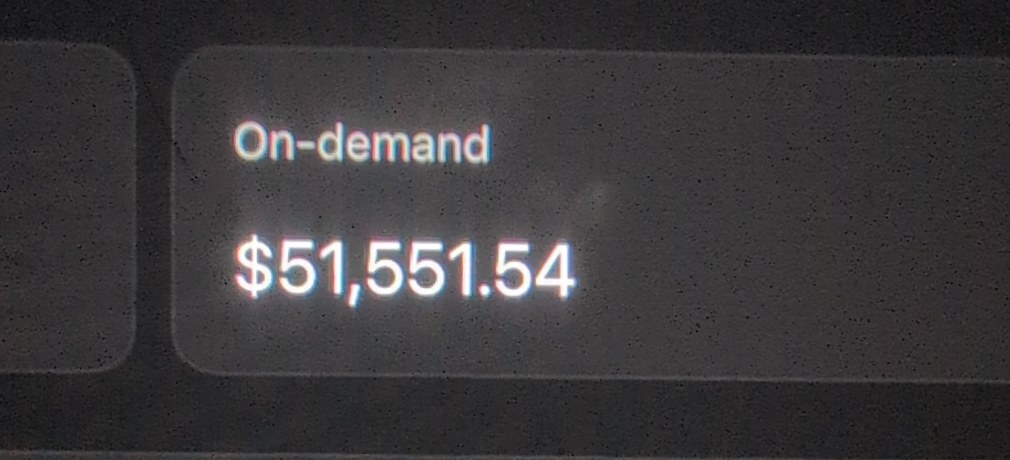
For most of this year the budget felt unlimited. Companies were handing engineers what looked like bottomless token access and telling us to go find out what it could do. I want to be honest about what that does to a person: the usage is addictive. Even on my own card, away from work, my Anthropic bill climbs into the thousands, and I watch it happen and top up anyway, fifty dollars at a time, because the extra reach is that hard to put down. Nothing stands between me and the next top-up except me, and that has not been much of a brake. At work I had what I thought was an unlimited budget, and I did not manage it at all. I topped the internal leaderboard for AI spend, which sounds like a brag and is closer to a confession. I was not posting a high score. I was running an experiment, it was expensive, and most of what it produced was an answer I did not want.
I built it every way I could
The question was whether a fleet of agents could do the work of a team, and I came at it from every angle I could find. I started with Factory's missions, then rebuilt the idea myself to make it better. I tried the spec-first version, where agents wrote a ninety-page specification and other agents programmed against it. Across the attempts I built something like ten agent patterns, from code reviewers and site builders to a development team I could hand a goal and walk away from. So I walked away. Every version produced a mountain of work, and every version produced the same kind of mountain: half-finished features, features that ran but were quietly buggy, pieces that did not fit the pieces beside them. The instinctive fix was more agents to supervise the agents, which only added more to coordinate. A single autonomous run of two or three days cost around five thousand dollars and left me with more to clean up than if it had done less.
The expensive part was not the tokens
The trap has a name. Addy Osmani calls it cognitive surrender: the point where the AI's output quietly becomes your output and there is nothing left for you to check, where you stop constructing the answer at all. I had built a team good enough to trust, so I trusted it, and I stopped doing the thinking. That was the costly part, more than the tokens. Let the models decide and you get work that is almost what you wanted. You pay for the distance between almost and right in cleanup.
Out of those ten patterns, one survived contact with real use, and it was the least impressive. Build on a platform instead of inside a closed swarm. Write a GitHub issue, point a single agent at it, let it work on its own branch, and review the result like any pull request. GitHub's issues and branches held the structure and the memory my fleet kept failing to invent for itself. Lean on a platform's primitives and the work holds together; keep it all running in one closed place and it ships fast and brittle. I tore the fleet down for that reason and rebuilt around a single agent with a workflow engine as its hands. The problem was never the model. It was asking a structureless swarm to do the job a team does, or that one careful agent on a real platform does, because the platform already holds the structure.
The most impressive thing was the one nobody wanted
The fleet was only half of what the budget bought. With money that felt limitless I built the rest of the art of the possible too. An AI that gave the presentation itself, in different voices, pulling charts onto the screen as it talked. Agents that clicked through a site, filled in the forms, and stood between a person and the software like an interpreter. The demos were real, they answered questions live, and they impressed the room. Almost nobody wanted them. The partner whose deck it was still wanted to give the talk himself, impressive AI or not. I had built an experience no one had asked for and no one was quite ready for, and I had paid a lot to find that out.
What the budget actually bought
Underneath the failures there was a real thing, and I do not want to bury it. With the right person driving, one of us did the work of two or three engineers, easily. Not a loose swarm, not a demo, but one experienced person who knew what good looked like, using AI hard. That part is real and it is not going away. What the budget would not buy was the rest: the part where impressive becomes wanted, and the part where it runs without that person. You pay for those separately, in tuition. By late May, Fortune had written tokenmaxxing's obituary: over, no return. The verdict is too tidy. The gain is real and the autonomy is not, and learning to tell them apart is the whole job.
Someone else paid for it
That gain has a cost I do not get to round off. One person doing the work of two or three is also two or three people who used to do that work and now do not. I used to run projects with budgets that paid engineers in India, and what ended those wires was the part that worked, not the part that failed. The team I am describing cost about fifty thousand dollars a quarter; their work now takes one person and a token bill. The money was not saved so much as moved, and where it lands is not a household. They were real people doing real work, and I am not going to dress that up.
The meter never stopped
So I keep experimenting, because at this speed standing still is its own expensive mistake. But I treat the budget as real now, even when it arrives labeled unlimited, because unlimited is a story you tell yourself. The meter never stopped; it only felt like it did. Some of what it bought was real and a lot of it was waste, and the invoice will not tell you which. It files next to the software renewals, which is how you stop noticing it used to pay someone.
Some operational details in these essays have been changed for narrative or privacy reasons. The arguments, the numbers, and the lessons are real.