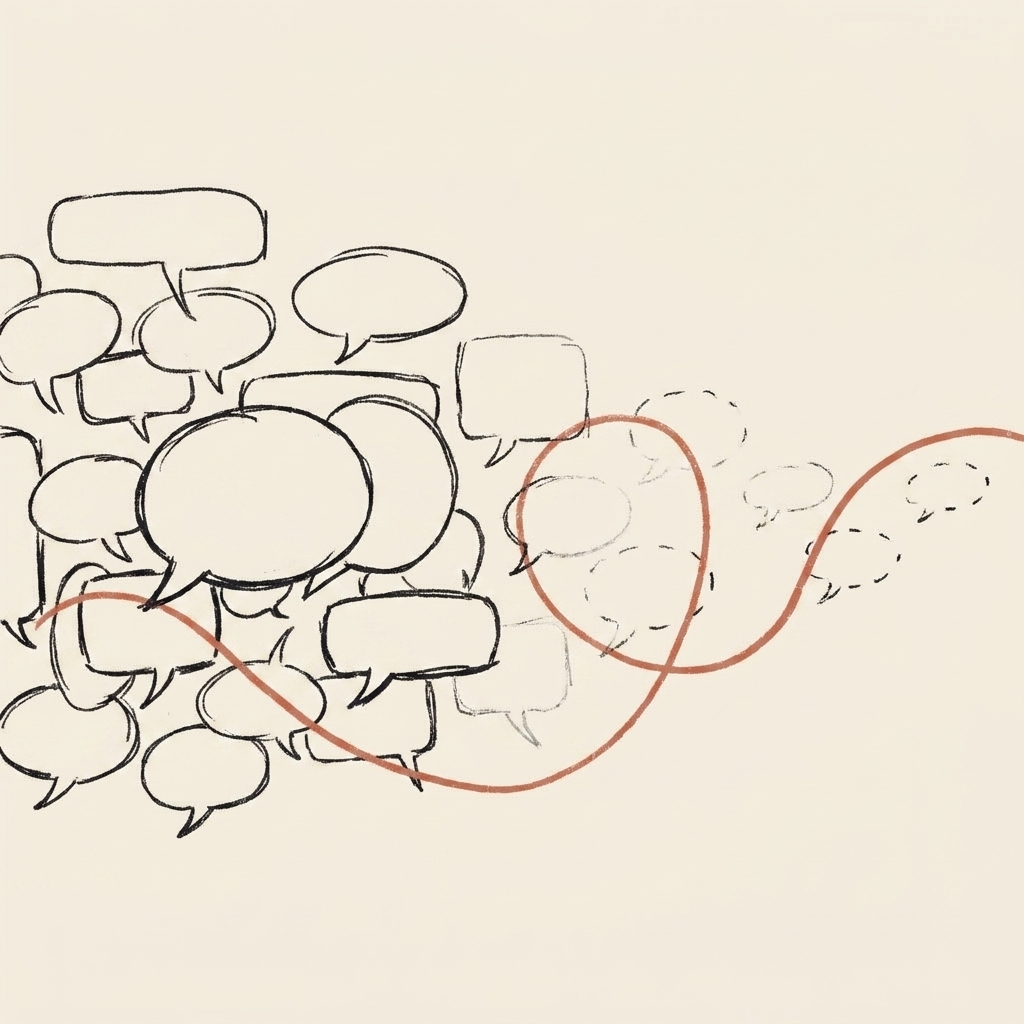
letmecheckbot is the second agent I run in production: a multi-user Telegram bot that lives in a group chat, a different shape from Penny, which only I use. The first essay about it covered what it does when you summon it. This one is about what it does when no one summons it.
Nobody is paid to keep your group chat alive
The feed in your pocket has thousands of engineers and a recommender behind it, all working to make sure it is never empty and never boring. It is staffed around the clock to hold your attention. The group chat with your closest friends has none of that. It runs on whoever feels like typing. So when people get busy it goes quiet, and quiet compounds: nobody wants to be the one who revives a dead thread, so it stays dead.
I think that is backwards. In 2023 the U.S. Surgeon General called loneliness an epidemic and put the mortality cost of being disconnected at up to smoking fifteen cigarettes a day (with none of the cool factor). A group chat with the people who know you matters more than a feed full of people who do not, and it is the one with no one keeping it alive. If the time you would have spent scrolling a feed alone went to that group chat instead, that is a win.
When no one summons it
Most bots are on-call. You summon one, it answers, it goes away. letmecheckbot does that too: one keyword and it looks a fact up, reads a link someone dropped, transcribes a voice note. That part is easy. The harder part is the other mode. With no keyword and no trigger, it reads every message, image, voice note, and link that goes past and turns each one into memory. It stays in the room the whole time and posts nothing, because a bot that talks when it was not needed gets muted. It posts on its own for one reason: the room has gone quiet.
What it does when the room goes quiet
The trigger is one number: fewer than twenty messages in the last seven days. Nothing else makes it speak on its own. If the room is still active it stays out, it will not talk over a live conversation. Once a room crosses that line it gets one turn, at most once a week.
When it does act, it does not post a hollow "hey, miss you guys." Everyone can smell that, and it makes a room feel deader. Instead it reaches into the room's own past. It looks at the same calendar date one, two, three, five, seven, and ten years ago, finds a day when the chat was busy, at least ten messages, and asks the model to read that day and pick the six to ten lines that were the day: the joke that landed, the hot take, the thing one person said that everyone still quotes. The model only picks from lines that were said, it never writes its own, so the worst case is a boring pick, not a made-up quote. Then it posts those lines back as a flashback, anchored to the original message so anyone can tap and jump to the day it happened, with the notification off.
A generic "miss you guys" fails because it comes from outside the group. A dead thread comes back when someone remembers something, like "oh my god, the time Dave." The bot can do that because it has the whole chat recorded, so on any date it can pull the same day from past years and read what was said. Everything it posts is something the group already said and forgot.
What the memory was for
In the architecture essay I argued that a member is mostly memory, and that the work was the plumbing that turns every message, image, voice note, and link into something searchable months later. I built that to answer questions like "what was that restaurant." This is a better use for it: the same recorded history lets the bot reach back years and hand the room a day it forgot. The re-engagement runs on memory I already had.

This is also why the bar for speaking unprompted is so high. The failure I most want to avoid is a bot that posts too much and gets muted, because once it is muted it is useless. So I don't plan to loosen this restraint later. Because it stays quiet almost all the time, the rare post is worth reading.
What ships, and the bet
The first version runs today, in one group chat: my closest friends, more than 86,000 messages going back almost four years. The re-engagement layer is live on it. It watches for the quiet weeks on its own, and when the room goes dark it posts that room's own past back into it, and never into a chat that is still going. It is small on purpose, and early. Whether a flashback reliably brings a room back is the open question I am watching, not something I am claiming yet, and the next step is to get it into more chats and see. The bet is that an agent can do one useful thing here: be the member who never forgets, and posts the thing that gets people talking again.
Almost everything else on your phone is built to hold your attention by yourself. I would rather build the opposite: something that gets a few people who like each other talking again, then stays out of the way. That is a small piece of software making a small dent in the loneliness problem. I will take that dent.
Some operational details in these essays have been changed for narrative or privacy reasons. The arguments, the design decisions, and the lessons are real.