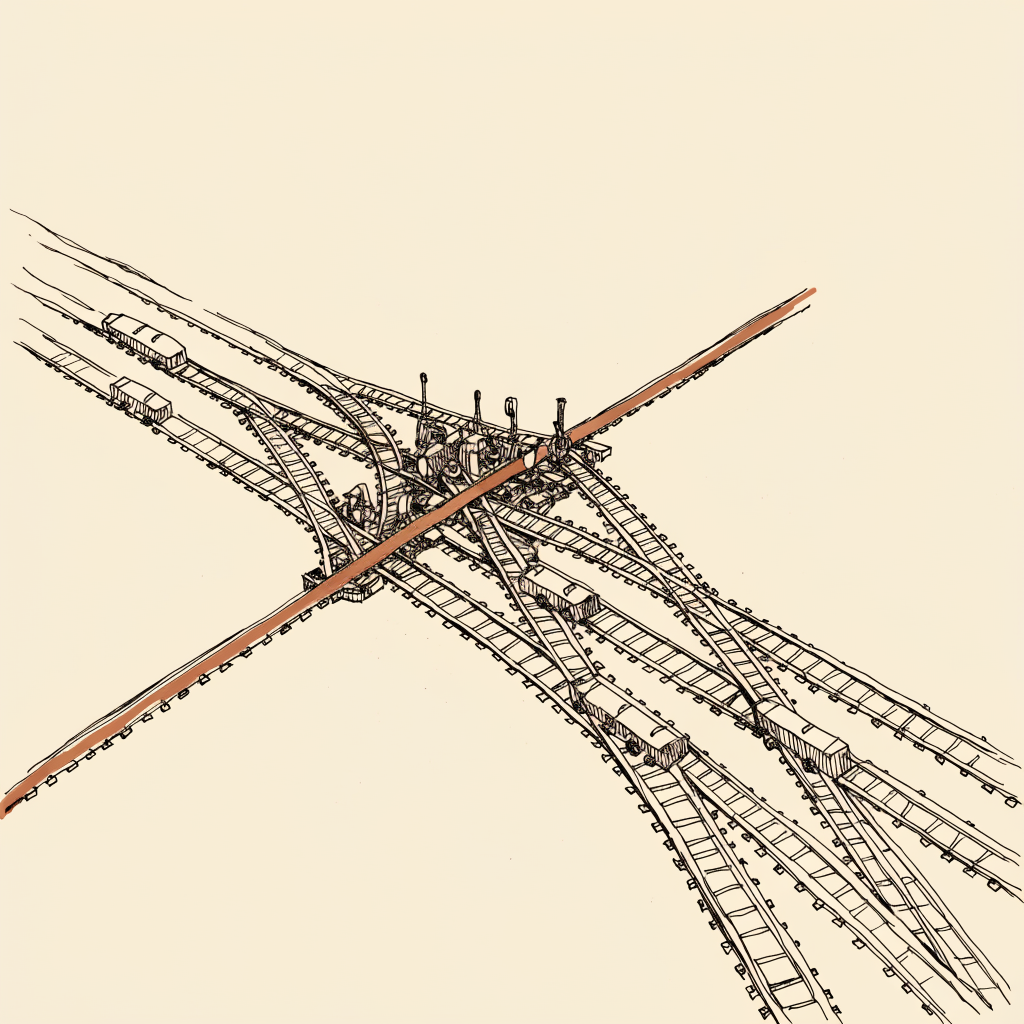
At 7:30 in the morning, the system was already busy.
One job checked the inbox. Another took a health snapshot. Another looked for stalled tasks. A reviewer reopened work that had been closed too early the night before. None of those jobs were glamorous. None of them looked like the demo that got everyone excited in the first place. But that was the point. The transcript had stopped being the product. The control plane had become the product.
The early wave of AI products was model-first. Pick a frontier model, wrap it in a prompt, add retrieval or tools, maybe call it an agent. If the task is bounded and the user is still doing the real project management, a single model can feel miraculous.
Not "write this paragraph." More like: keep this project moving, hand work between specialists, remember what matters tomorrow, recover when a tool fails, ask for approval when the decision is subjective, and do not quietly declare victory after one decent-looking pass.
The progression is more predictable than most architecture diagrams admit. In one 37-day operating log, the system ran 5,079 jobs and moved through a clear sequence: chatbot, task executor, scheduler, multi-model coordinator, then orchestrator. Each step solved a bottleneck. Each step also created a new failure class.
A chatbot fails in obvious ways. It forgets context, hallucinates, and gives you a nice answer while leaving the hard part in your lap.
A task executor is more interesting. It can take work off the critical path. But the moment work leaves the main conversation, you need queues, state, and a way to tell the difference between urgent work and background work. Otherwise everything waits in the same line and the system becomes polite chaos.
Schedulers help, until time itself becomes a source of work. Memory consolidation jobs. Inbox checks. Status snapshots. Retry logic. By then the machine is doing things because the clock moved, not because a human typed. That is progress. It is also overhead.
In mature operating phases, more than half of the jobs in that same system were maintenance. Health checks, snapshots, triage, project advancement, review loops. That sounds wasteful until you realize what the alternative looks like. No maintenance means silent drift. Tasks close too early. Priorities rot. Workers duplicate each other. A system without maintenance is not more autonomous. It is just borrowing reliability from the human operator.
This is the dirty secret of AI deployment: the model is usually the easy part. The orchestration layer is where systems live or die.
You can see it in the failure patterns. The ugly incidents are rarely "the model forgot what Paris is." They are coordination failures.
Here is one I can date. On 2026-04-22 a rebuild fanned out into duplicate work because the n8n queue that drives this system had no dedup key on enqueue. The same task got picked up by overlapping paths, each of which did its job correctly. The model was never wrong. The plumbing let two correct workers step on each other. The fix was not a smarter prompt. It was an idempotency key on the queue insert so a second enqueue of the same task collapses into the first. Walden Yan's Don't Build Multi-Agents (Cognition, 2025) names this exact shape: actions carry implicit decisions, and when two workers act on the same context their implicit decisions conflict.
The pattern repeats. A job gets marked done without a second pass because throughput was rewarded more than verification. A research project starts generating polished artifacts before the literature review is done because the system learned how to act faster than it learned how to ask whether it should.
Those are not model IQ problems. They are management problems. They sit in routing rules, completion gates, handoff discipline, ownership boundaries, and memory policy. In other words, they sit in the operating system wrapped around the model. Anthropic's Building Effective Agents (Schluntz and Zhang, December 2024) makes the same argument from the model vendor's side: reach for an augmented single loop with good tools before you reach for an orchestration diagram, because the diagram is where the failures move.
The appeal is obvious. One model researches, another codes, another reviews, another writes, maybe a planner coordinates the whole thing. It feels like a team. But a pile of agents is not a system any more than a Slack workspace is a company. Without control, multi-agent setups recreate the worst parts of group work: duplicate effort, circular conversations, fake consensus, and everyone assuming someone else is accountable.
Practitioners should be skeptical of "agents collaborating" as a magic trick. Unrestricted peer-to-peer chatter is usually a liability. The architectures that hold up in practice are more boring. Hub-and-spoke. Typed handoffs. Bounded roles. Artifacts on disk. Explicit review passes. A clear boss. The 12-factor agents manifesto (Horthy et al., HumanLayer) reads as a list of these boring decisions: own your control flow, own your context window, keep the agent small and stateless. None of it is about model intelligence. All of it is about the operating system around the model.
That last part makes some people uncomfortable because it sounds less like intelligence and more like operations. Good. Operations is where the real difficulty lives.
If you are building these systems professionally, the design question is not "how do I get the smartest model into the loop?" The question is "what happens after a decent answer shows up?" Who owns the task? What state survives the session? What triggers a retry? What requires a second model? Which jobs exist only to keep the machine coherent? When do you slow the system down on purpose?
Those questions sound mundane right up until the day they save you.
They also change how you should evaluate AI systems. A model benchmark tells you almost nothing about whether the system can operate across time. What matters is the control sequence around it. Can it explain why a job exists? Can it carry work forward across days? Can it route to the right tool or model family instead of asking one model to be everything? Can it surface uncertainty before the mistake becomes public?
That is the shift from isolated models to orchestrated agents. I stopped asking "how good is the answer?" and started asking "can the system stay coherent while work keeps arriving?"
The teams that understand this early will build differently. They will invest less in prompt theatrics and more in ownership, auditability, memory boundaries, and review rules. They will treat model routing as a practical systems problem, not a branding decision. They will measure the autonomy tax instead of hiding it. And they will resist the urge to widen agent freedom before the control plane is ready for it.
The next wave of AI products will not be won by the prettiest demo. It will be won by the teams whose systems can survive a Tuesday morning: half-finished tasks, stale context, two competing priorities, one broken tool, and a reviewer who catches what the first pass missed.
That is when you find out whether you built with models, or whether you built a system.