I've spent the last twelve months coding through AI tools every working day, on the system that powers a live orchestration runtime past 5,000 jobs. Not in a bake-off. In production, where the bill arrives every month and the only honest measure of a tool is whether I kept paying for it. After all of that, the combination that does the most work costs me about $35 a month.
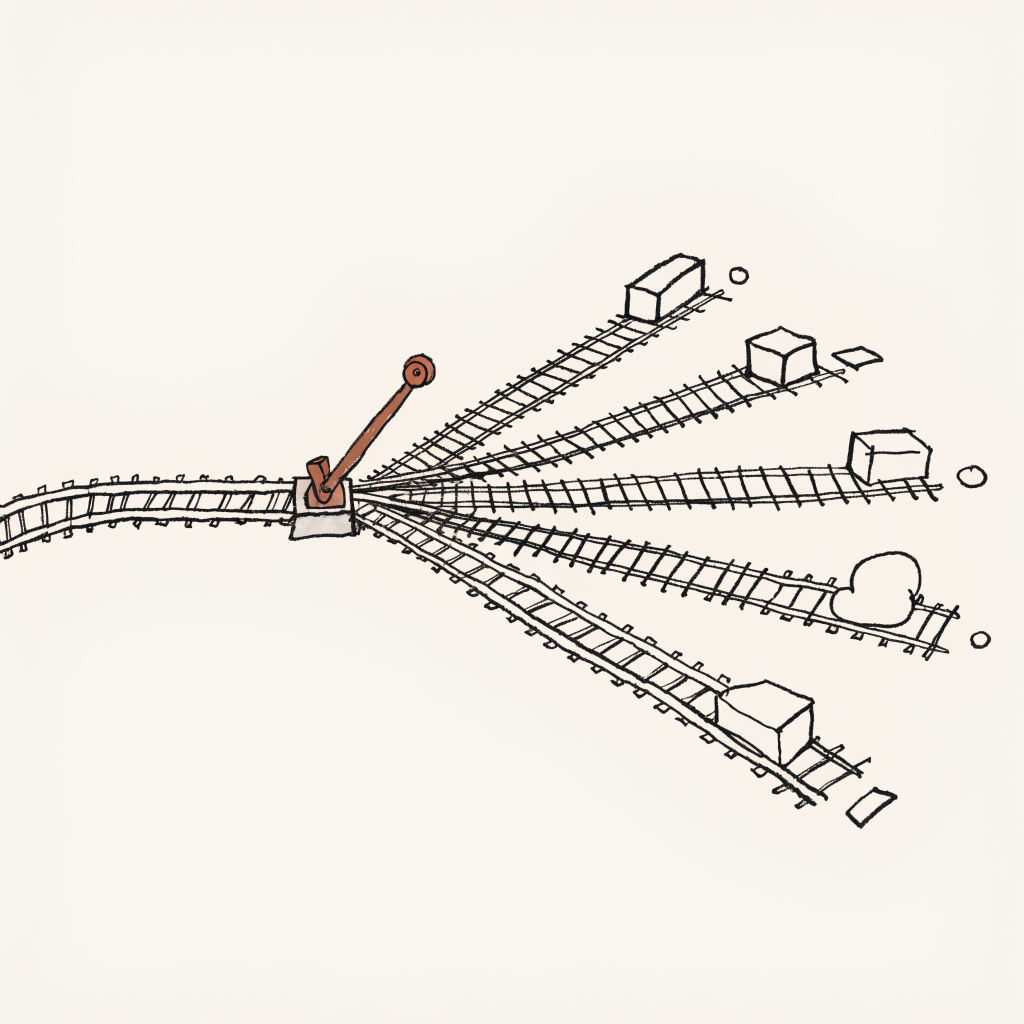
That number is the whole point of this piece. Most tool comparisons answer "which model scored highest on a benchmark?" This one answers the question the leaderboards never touch: across a real stack, doing real work, what did each tool actually cost, and what does the spend teach you that a capability score can't? The headline is that cost discipline turned out to be a routing problem, not a tool-selection problem, and $35 is what routing well looks like at the bottom of the page.
The stack settled into five tools. Claude Code is my primary environment, the runtime inside that orchestration system. I reach for OpenAI's GPT-5.4 via API when I hit usage limits or need structured JSON output in a pipeline. I keep Grok 4 around for speed-sensitive debugging. Windsurf's free tier handles autocomplete in VS Code. And I run local Llama 3.3 70B on a machine with a 4090 for high-volume, privacy-sensitive batch generation. None of them turned out to be clearly best, which is the first thing the year taught me. Each holds a lane, and the cost only makes sense once you know which lane you're in.
What each tool actually is
First, a structural comparison, free of marketing language. This is where I started a year ago, before the bill taught me anything.
| Feature | Claude Code | GPT-5.4 (API) | Windsurf | Grok 4 | Local Llama |
|---|---|---|---|---|---|
| Full codebase context | Yes | Via API | IDE only | Via API | Limited |
| Terminal / bash integration | Native | No | No | No | No |
| Agentic execution | Yes | Assistants API | No | No | No |
| Context window | 1M tokens | 272K tokens | 100K tokens | 256K tokens | 8K-128K |
| Self-hosting / local | No | No | Enterprise | No | Yes |
| Data privacy | Cloud (Anthropic) | Cloud (OpenAI) | Cloud / On-prem | Cloud (xAI) | Fully local |
| Primary use case | Agentic coding | API integration | IDE autocomplete | Fast Q&A | Batch / offline |
The structural difference that matters most: Claude Code is the only tool in this group designed from scratch to operate as an agent inside your actual development environment. It reads files, runs commands, writes diffs, and checks its own output, all without leaving the terminal. Everything else is either IDE autocomplete, a chat interface, or an API you have to wrap yourself.
Where each one earned its lane
I tested all five across three task categories I actually care about: building new features across multiple files, debugging live production issues, and refactoring existing systems. These aren't toy tasks. They're the work.
Greenfield feature development
Claude Code is consistently the best here, and it's not close. When the task spans three files and requires understanding how a queue processor relates to a database schema and a webhook handler, Claude Code reads all three, builds a mental model, and writes coherent changes that fit the existing patterns. It doesn't invent new variable naming conventions. It doesn't add dependencies that were already handled elsewhere. It holds context.
GPT-5.4 via the API is genuinely strong, within 15% in my informal assessment, but it requires more explicit scaffolding. You have to tell it what files are relevant rather than having it figure that out. On large diffs it also has a tendency toward over-engineering: it adds abstractions that look elegant in isolation but don't fit the surrounding code. Claude Code seems to read the existing architecture as a constraint rather than a suggestion.
Grok 4 surprised me on smaller, bounded tasks. Asking it to write a single utility function with clear specs? Fast and accurate. Ask it to reason across four files and maintain consistency? It gets the logic right more often than I expected, but it misses stylistic context. It writes code that works but reads differently from everything around it.
Windsurf's autocomplete tier isn't meant for this category. It shines at completing lines and small blocks in context, which it does well for free. Local Llama 3.3 70B is usable for self-contained modules but struggles with anything that requires holding state across a long context window.
Debugging and root cause analysis
This is where Grok earns its keep. Its raw response speed is legitimately faster than Claude Code's full agent loop, and for quick "why is this returning null?" questions, the faster turnaround often matters more than deeper context. When I'm in a debugging session and want to throw three hypotheses at something, Grok's latency profile keeps the flow going.
For complex bugs, the kind that require tracing a value through five function calls and understanding which one violated an invariant, Claude Code is more reliable. It doesn't just point to a line; it explains the causal chain. That explanation quality matters when you're debugging something you didn't write, or when you're trying to prevent the same class of bug from appearing elsewhere.
GPT-5.4 is good at both but requires the most context-setting. If you paste the relevant code and a clear error message, it diagnoses accurately. If the bug is more subtle or requires knowing the broader system, it hedges more than the other two.
Refactoring and architecture
Claude Code is miles ahead here. Nothing else comes close for large-scale refactors.
The reason is compound: it can read an entire codebase, form a plan, execute that plan across multiple files, and then run the tests to verify nothing broke. That last step matters enormously, and it is exactly the plan-act-observe loop that separates a real agent from a chat box. Most AI tools will confidently write a refactor and leave you to find out whether it worked. Claude Code closes the loop itself. When it fails, it reads the error output and adjusts.
Most AI tools write the refactor and leave you to find out if it worked. Claude Code closes the loop itself.
The same task, three ways
The same refactoring prompt across three tools. The task: "This error handler is duplicated across four route files. Extract it into a reusable middleware."
Here's how each approaches it, paraphrased from real sessions:
// First reads all four route files autonomously, then:
// "I found the duplicated handler in routes/users.js:47,
//  routes/products.js:31, routes/orders.js:58, routes/auth.js:22.
// The patterns are similar but not identical - users.js adds a
// requestId to the error payload while the others don't.
// I'll create middleware/errorHandler.js that accepts a config
// object to handle both patterns, then update all four files."

// Creates middleware/errorHandler.js:
const errorHandler = (options = {}) => (err, req, res, next) => {
  const payload = {
    error: err.message,
    code: err.code || 'INTERNAL_ERROR',
    ...(options.includeRequestId && { requestId: req.id }),
  };
  res.status(err.status || 500).json(payload);
};

module.exports = errorHandler;

// Then modifies each route file, runs `npm test`, sees one test
// failing in users.js, reads the test, adjusts the middleware,
// runs tests again. All pass. Reports back with a diff summary.
// Responds to the prompt without reading files first.
// "Here's a generic error handling middleware pattern:

const errorHandler = (err, req, res, next) => {
  console.error(err.stack);
  res.status(err.statusCode || 500).json({
    success: false,
    message: err.message || 'Internal Server Error',
  });
};

module.exports = errorHandler;

// Note: this introduces `success: false` which is not in the
// original code, changes `code` to `message`, and doesn't
// handle the requestId difference. Requires a follow-up prompt
// with the actual file contents pasted in to get it right.
// Writes a correct generic middleware, but:
// - uses CommonJS when the codebase uses ESM
// - doesn't know about the requestId variant
// - suggests putting it in `utils/` not `middleware/`
// - requires four additional prompts to converge on the
//   existing style. Good for greenfield. Weak for fit.

export function errorHandler(err, req, res, next) {
  res.status(err.status || 500).json({ error: err.message });
}
// (Uses ESM after correction, but misses config pattern)
The difference isn't intelligence. All three models understand error middleware. The difference is context discipline and closure. Claude Code reads what exists before it writes. That changes the quality of the output in ways that compound across a large codebase.
The difference isn't intelligence. All three models understand error middleware. The difference is context discipline and closure.
What I actually paid
This is the section most comparisons skip or bury in caveats. Let me be direct about what I actually spend.
My actual monthly spend as a solo practitioner: Claude Code Pro at $20 plus GPT-5.4 API calls that average around $15/month. Call it $35 total for serious daily engineering use. That's the combo I run. Claude Code handles the agentic work; GPT-5.4 handles pipeline integrations where I need structured JSON output or am calling from a script that can't launch an interactive session.
For teams, the math changes. GPT-5.4 API costs scale linearly with usage and can reach $80-150/month per heavy engineer once you factor in context-heavy IDE integration. Claude Code's per-seat pricing (Max at $100 or $200/month) becomes attractive at that point, especially with the unlimited usage cap.
Local Llama has the best unit economics past a certain threshold. If you're generating more than 50 million tokens per month (realistic for batch processing, automated code review, or high-volume test generation) the hardware amortizes within three to four months. The operational overhead is real though. You manage the server, handle model updates, and accept the quality ceiling of open-weights models on complex reasoning tasks.
The open-source gap on coding quality is real but narrowing. Qwen 2.5 Coder 72B and DeepSeek-Coder-V2 both reach within 20-25% of GPT-5.4 on standard coding benchmarks. For routine tasks (completing functions, writing tests, generating boilerplate) open-source is already competitive. For architectural reasoning and multi-file coherence, the frontier models still have a meaningful edge.
When to reach for each one
Here's my actual decision tree, built from a year of switching between them.
Claude Code is my primary environment for anything that requires real understanding of a system. Greenfield features, refactors, debugging sessions where I want the tool to look before it answers, and any agentic task where I want the model to plan and execute without constant hand-holding. If the task is "build this thing," Claude Code is the answer.
GPT-5.4 (API) comes in for pipeline integrations where I need structured output, for a second opinion on complex logic (running both models on a critical algorithm and comparing their approaches has caught bugs that one alone missed), and for tasks that live inside scripts rather than interactive sessions. It's also my fallback when I've hit Claude's usage limits during a heavy work session.
Grok 4 earns its place for speed. Quick documentation lookups, fast hypothesis testing, questions about library behavior where I want an answer in five seconds rather than twenty. Its web access grounding also makes it useful for questions about recent API changes. It's less likely to give you docs that are six months out of date.
Windsurf lives in my IDE and handles autocomplete. It's free, it's fast, and for line-by-line completion in a file I'm actively editing it's genuinely useful. I don't ask it to think. I ask it to complete. It does.
Local Llama handles anything privacy-sensitive, anything I need to run in bulk programmatically, and anything where I'm comfortable trading quality for zero latency and zero API cost. Good for test generation, documentation drafting, first-pass code review on large diffs, and any context where the data shouldn't leave my machine.
What the bill taught me
Strip away the feature tables and the year comes down to one number: about $35 a month, every month, for the combination that does the most work. That is not the cheapest possible stack and it is not the most capable possible stack. It is the one that survived twelve months of me deciding, on the first of every month, whether it was still worth paying for.
The thing the bill taught me that no benchmark did: cost discipline is a routing problem, not a tool-selection problem. The engineers spending the least per useful output in 2026 are not the ones who picked the single best model. They are the ones who route, sending bulk generation to open-weights models running locally, agentic work to Claude Code, structured pipeline calls to the GPT-5.4 API, and fast lookups to Grok. I learned that by watching which line items I could move off the metered API and onto a flat-fee plan or my own hardware without losing anything I cared about.
Claude Code's $20 flat fee is the clearest example. The same agentic work billed per token through an API would have cost multiples of that during the heavy weeks. The flat plan is the reason I stopped flinching at long refactor sessions. That predictability changed how I worked more than any single capability did.
So if you are standing where I was twelve months ago, deciding what to pay for: do not start from the leaderboard. Start from your own task mix. Name the three or four kinds of work you actually do, and route each kind to the tool whose cost structure fits it. The bill is the honest benchmark, and it only makes sense one lane at a time.
Citations & Sources
[1] Anthropic, "Claude model documentation," March 2026 (current model family: Claude Opus 4.6, Sonnet 4.6, Haiku 4.5). [2] OpenAI, "GPT-5 Technical Report," August 2025; GPT-5.4 released March 2026. [3] HumanEval benchmark scores as reported on LiveCodeBench, March 2026. [4] Qwen2.5-Coder: A Code-Specific Language Model, Alibaba DAMO Academy, November 2024. [5] DeepSeek-Coder-V2: Breaking the Barrier of Closed-Source Models in Code Intelligence, DeepSeek AI, June 2024. [6] xAI, "Grok 4 model card," July 2025. [7] Meta, "Llama 3.3 70B model release," December 2024. [8] Windsurf company documentation, enterprise pricing page, 2025. [9] OpenAI API pricing page, as of March 2026. Performance assessments are based on the author's own testing and not reproducible by construction. They reflect task-specific observations, not controlled experiments.